Beep Me! The Pager Phenomenon and the Secret Language of the 90s
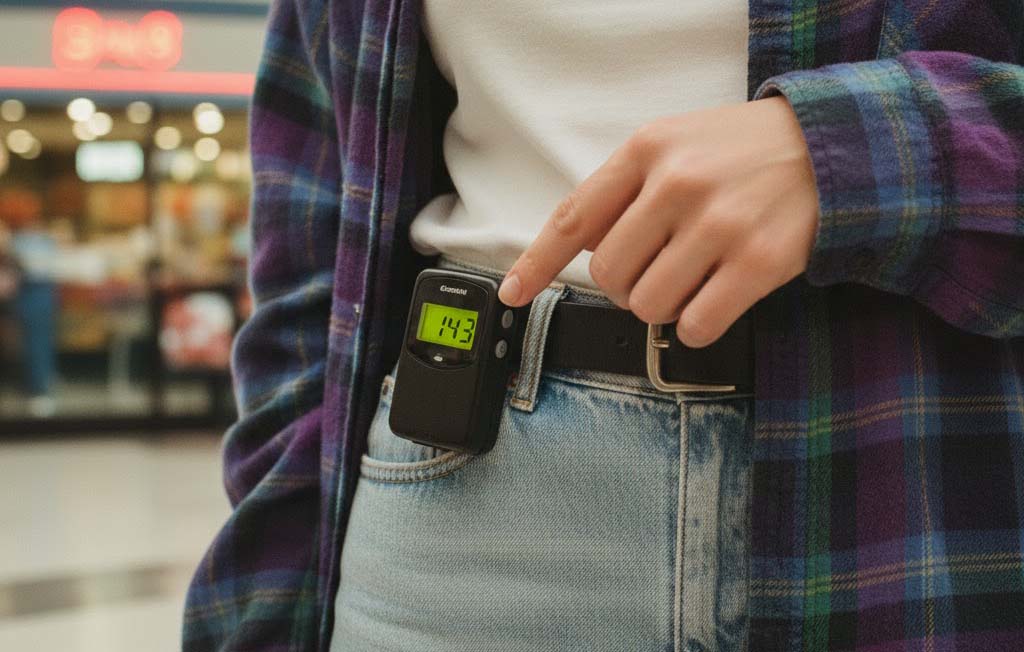
Before the ubiquitous glow of smartphones, before texting became a verb, there was the pager. From the late 1980s through the mid-1990s, these small, unassuming devices clipped to belts and waistbands were the ultimate status symbol and a vital communication tool, signaling urgency, availability, and a certain undeniable coolness. For a brief, but impactful era, pagers (or "beepers") revolutionized how people connected, giving rise to a unique and often cryptic language of numerical codes.
*From Doctors to Drug Dealers: The Rise of the Pager*
Pagers had existed for decades, primarily used by medical professionals, emergency services, and field technicians. They offered a simple, one-way communication: someone called a number, entered a callback number, and the recipient's pager would beep, vibrate, or flash, displaying the number to call.
However, in the late 1980s and early 1990s, pagers began to break free from these professional confines. Cheaper devices, more accessible service plans, and a growing need for instant contact fueled their explosion. Suddenly, construction workers, busy parents, service personnel, and even drug dealers adopted them. They were compact, relatively inexpensive, and offered a crucial bridge between being tethered to a landline and the still-nascent, expensive world of cellular phones.
For teenagers and young adults, especially in urban environments, having a pager was a sign of popularity and importance. It meant you were in demand, that people needed to reach you. The distinct "beep-beep-beep" sound became the soundtrack of a generation, often heard piercing through classrooms, movie theaters, and crowded malls.
*The Art of the Code: Speaking in Numbers*
The most fascinating aspect of the pager era was the emergence of a complex system of numerical codes. Because basic pagers only displayed numbers, users had to get creative to convey more than just a callback number. This wasn't just about saving money on calls; it was about creating a secret language, a quick and efficient way to send a message without a verbal conversation.
These codes were part ingenuity, part slang, and part status symbol. They ranged from simple instructions to surprisingly emotional expressions. Here are some of the most common and iconic pager codes:
- 143:* The quintessential pager code. It stood for "I Love You" (1 letter in "I," 4 letters in "Love," 3 letters in "You"). It was widely understood and became a shorthand for affection or a subtle flirtation.
- 411:* Information. Still used today, this code simply meant "I need information" or "Call me for details."
- 911:* Emergency. Not just a callback number, this indicated an urgent situation requiring immediate contact.
- 07734:* This one was clever. Hold your pager upside down, and it spells "HELLO." A friendly greeting.
- 187:* This was a darker code, originating from the California Penal Code for murder. In pager lingo, it could mean "I'm going to kill you" (often jokingly or in anger) or "Watch out for trouble." It was popularized by gangsta rap and became a recognized, if illicit, code.
- 220:* "Need to talk to you." A direct, no-frills request for a conversation.
- 7734:* Spells "hELL" upside down, often used for "Go to hell" or expressing extreme frustration.
- 5318008:* This one requires no explanation for anyone who ever played with a calculator in school. Upside down, it spells "BOOBIES," a common prank or juvenile message.
- 80085:* Spells "BOOBS" upside down. Another classic.
- Any repeating number (e.g., 222, 333, 444):* Often meant "Call me back urgently" or sometimes acted as a general "hello, thinking of you." The specific number could sometimes imply a specific person or location.
- Leaving just your phone number:* The most basic message, simply asking the recipient to call you back.
*The Decline of the Beep*
The reign of the pager was relatively short-lived. By the late 1990s, the advent of affordable cellular phones with two-way text messaging capabilities (SMS) began to make pagers obsolete. Why carry a device for one-way communication when a cell phone could do so much more?
By the early 2000s, pagers had largely faded from mainstream use, relegated once again to niche professional applications where their reliability and simplicity were still valued.
Yet, the legacy of the pager lives on. It was a crucial steppingstone in the evolution of personal communication, teaching a generation how to be constantly connected and creating a subculture of coded messages. For those who remember it, the distinct "beep" still evokes a specific era—a time when brevity was truly the soul of wit, and every number told a story.
Comments (0)
No comments yet. Be the first to share your thoughts.
Sign in in your browser to leave a comment.