
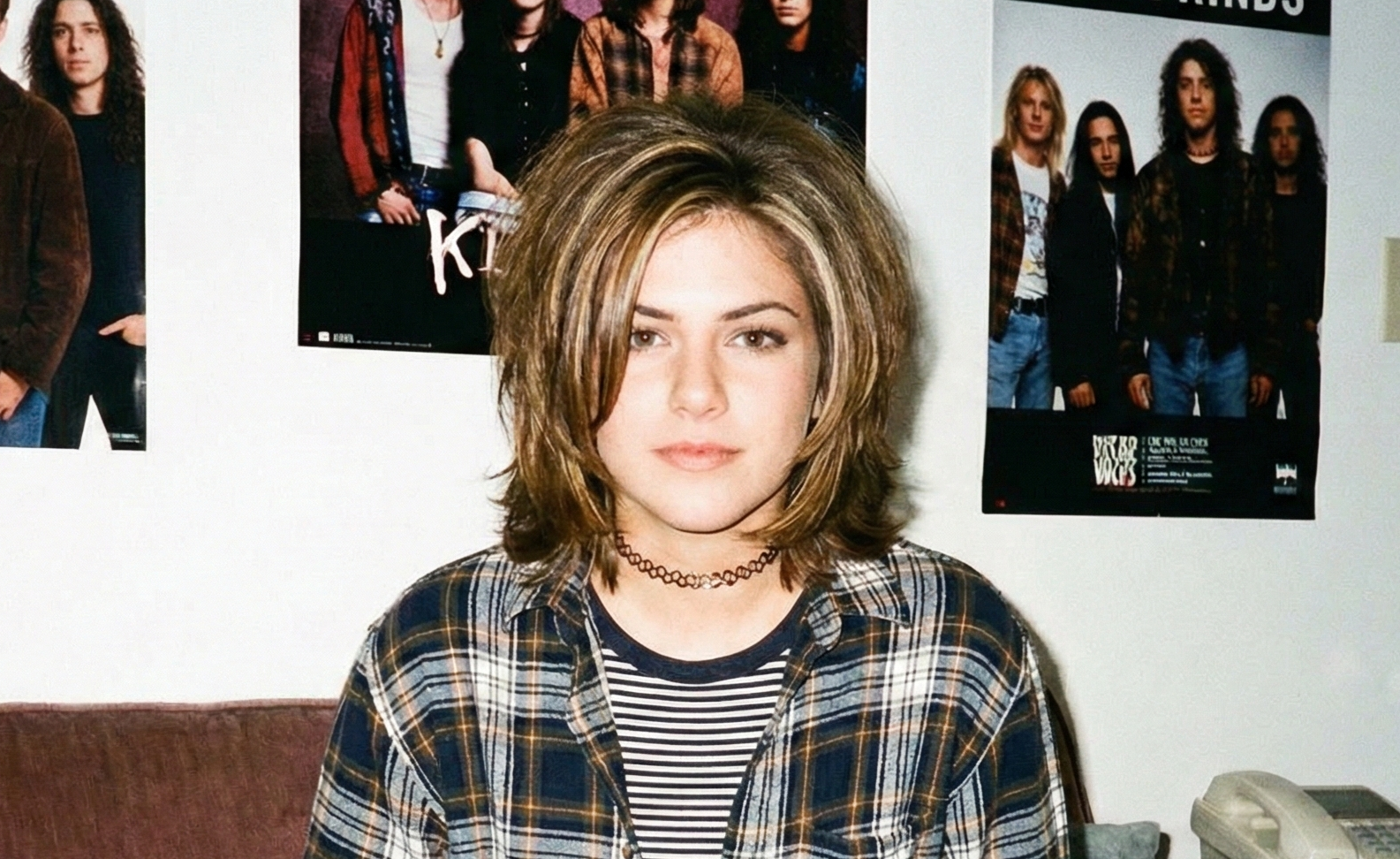
The Happy Accident: How a Salon Fix Became the 90's Biggest Hair Trend
The "Rachel" wasn't just a haircut; it was a cultural flashpoint. For a few years in the mid-1990s, you couldn't walk into a grocery store, turn on a television, or flip through a magazine without seeing that cut. It was bouncy, it was layered, it was highlighted to perfection, and it sat atop the head of America’s newest sweetheart, Jennifer Aniston. Here is the story of how a "happy accident" in a Hollywood salon became the defining look of a generation.
*The One With the Haircut*
The year was 1995. Friends was in its first season and quickly becoming a ratings juggernaut. But while audiences were falling in love with the characters, they were becoming obsessed with Rachel Green’s hair.
The style debuted in the episode "The One With the Evil Orthodontist," which aired in April 1995. It was created by Aniston's longtime hairstylist, Chris McMillan. According to McMillan, the cut wasn't part of a grand master plan to shift global fashion trends. It was a fix. Aniston had arrived at his salon with frizzy, damaged hair and bangs that needed to be grown out.
McMillan’s solution was a "shag" cut—a style that had been popular in the 70s—updated for the 90s. He chopped her hair to the collarbone, added choppy, face-framing layers to hide the growing-out bangs, and blow-dried it with a round brush to create volume at the roots and those signature inward curves at the ends.
*The Mania*
Almost overnight, photos of Aniston were being ripped out of TV Guide and furiously thrust into the hands of stylists from Los Angeles to London.
The craze was unprecedented. Salons reported that they were doing "The Rachel" dozens of times a week. One stylist in Alabama estimated that 40% of her entire business came from women requesting that single haircut. It crossed socio-economic borders and age groups; teenagers wanted it, working professionals wanted it, and suburban moms wanted it. Why did it take off?
- It was flattering:* The face-framing layers (often described as "heart-shaped") tended to look good on a variety of face shapes, softening jawlines and highlighting cheekbones.
- The "Anti-80s":* The 1980s were defined by stiff, hair-sprayed, permed excess. The Rachel, while voluminous, moved. It looked touchable, shiny, and bouncy. It felt like the perfect transition into a more relaxed (but still groomed) era.
- The "Everywoman" Appeal:* Rachel Green was a waitress (albeit a terrible one). She was relatable. The haircut felt accessible in a way that avant-garde high-fashion runways did not.
*The Irony: "The Ugliest Haircut I've Ever Seen"**
There was one person who didn't understand the hype: Jennifer Aniston.* In the years since the craze, Aniston has been vocal about her dislike for the style. In a 2011 interview with Allure, she famously said, "I think it was the ugliest haircut I've ever seen."
Her disdain wasn't just aesthetic—it was practical. The great deception of "The Rachel" was that it looked "effortless." In reality, it was a maintenance nightmare. That bounce and volume didn't happen naturally; it required a professional blow-dry, specific products, and round-brush wizardry.
Aniston admitted that without Chris McMillan attached to her hip, she was lost. "I’d curse Chris every time I had to blow-dry," she later said. "It took three brushes—it was like doing surgery!"
For millions of women who got the cut hoping for a "wash-and-go" look, the morning routine became a rude awakening. The style quickly deflated without the structural support of a professional blowout, leaving many with a flat, choppy mullet rather than the glossy mane of a sitcom star.
The Legacy
By Season 4 of Friends, Aniston had grown the cut out, trading the choppy layers for the long, sleek, bohemian look she prefers in real life. But the cultural imprint remained. "The Rachel" proved the power of television to dictate beauty trends. It paved the way for the celebrity hair obsessions that followed (like the obsession with Sarah Jessica Parker’s curls in Sex and the City). Even today, modern variations of the shag cut—often called the "Butterfly Cut" or the "90s Blowout"—owe their DNA to Chris McMillan’s creation.
It remains a perfect time capsule of the 1990s: optimistic, bouncy, and perhaps a little more high-maintenance than we like to remember.
Comments (0)
No comments yet. Be the first to share your thoughts.
Sign in in your browser to leave a comment.