Zomething Different: The Clear Craze and Curious Case of Zima
Before the hard seltzer boom, before craft ciders and spiked lemonades dominated the cooler, there was Zima. For a brief, shining moment in the early 1990s, this crystal-clear, citrus-flavored malt beverage was not just a drink; it was a cultural phenomenon—a liquid embodiment of the '90s "clear craze" that promised purity and ended up as a punchline.
This is the story of Zima, the revolutionary beer alternative that flew too close to the sun.
*The "Clear Craze" and the Birth of a Malternative*
Zima was born from a simple observation by the Coors Brewing Company: a lot of people just didn't like the taste of beer. In 1993, after two years of development, Coors launched Zima Clearmalt nationally, positioning it as a revolutionary "malternative."
It arrived at the perfect time. The early '90s were obsessed with transparency as a marketing concept. This "clear craze" equated a lack of color with purity and health. It gave the world Crystal Pepsi and Tab Clear. Zima, with its vodka-like clarity and sleek, fluted bottle, was the alcoholic embodiment of this trend.
The product itself was a feat of beverage engineering. Coors essentially took a cheap, low-grade lager, filtered it through charcoal to strip away all color and flavor, and then added a proprietary lemon-lime, citrus-like taste. The result was a lightly carbonated, sweetish beverage with a 4.7% ABV, similar to a light beer but with no "beery" taste.
**"Zomething Different": A Meteoric Rise*
Coors invested heavily in its new product, backing the launch with a $50 million marketing campaign. The mysterious and ubiquitous ads, featuring a cool, hat-wearing spokesman, famously used the tagline, "Zomething different."
And it was. The campaign was a massive success. In its 1994 peak, Coors sold an astonishing 1.2 million barrels of Zima. It was reported that nearly half of all American alcohol drinkers tried it at least once. It was the "it" drink, a fixture at parties, and a genuine curiosity that everyone had to taste.
For a moment, it looked like Coors had found the future of the beverage industry.
*The Image Problem and the "Girly Drink" Kiss of Death*
The problem with Zima wasn't that people didn't try it—it was that the wrong people liked it.
Coors' marketing was aimed squarely at men, intending to capture the male drinker who wanted something lighter than beer. However, the drink's sweet, citrusy, Sprite-like flavor and lack of beer-like bitterness made it wildly popular with a different demographic: women.
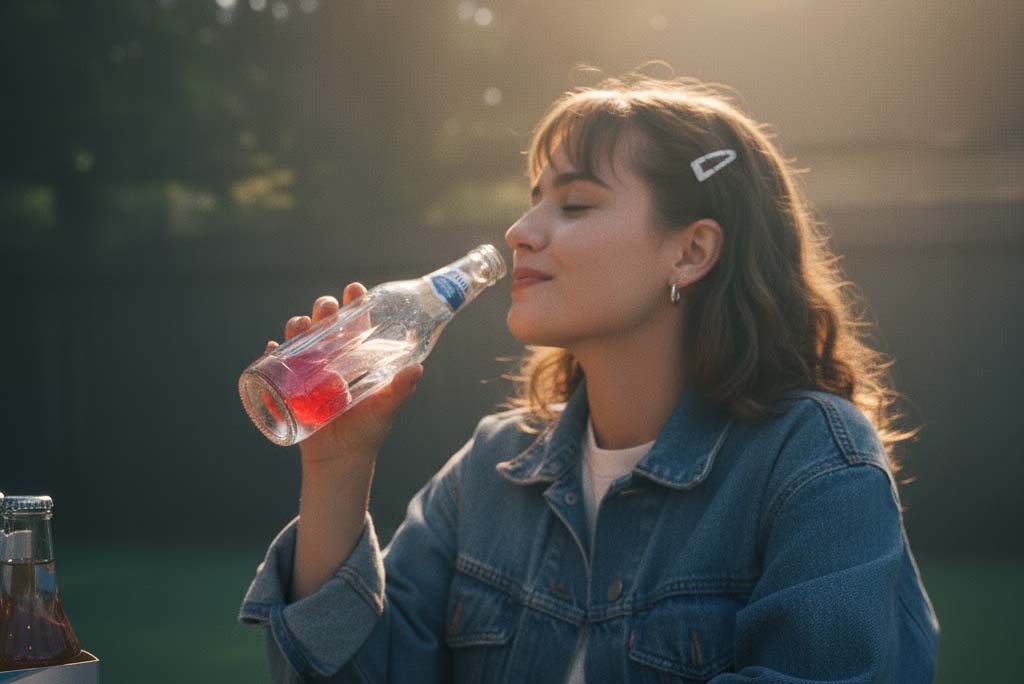
In the rigid gender-marketing landscape of the 1990s, this was a fatal flaw. Men, its target audience, began to shun Zima, deriding it as a "girly drink." This reputation was cemented by a popular ritual where drinkers would drop a Jolly Rancher candy into the bottle to change its color and sweeten it even further.
Soon, Zima became a national joke. David Letterman mocked it relentlessly on his late-night show, and it became a pop-culture shorthand for "effete."
Coors scrambled to save its brand. In 1995, it launched Zima Gold, an amber-colored, higher-alcohol version that promised a "taste of bourbon." It was a desperate attempt to re-masculinize the brand, and it failed spectacularly, disappearing from shelves within a year. Other variations, like Zima XXX (with even higher alcohol content), also failed to find an audience.
*The Long, Slow Fade*
By 1996, just two years after its peak, Zima's sales had plummeted by two-thirds. Though it limped along for another decade as a shadow of its former self, the craze was definitively over. Coors finally discontinued Zima in the United States in October 2008.
Interestingly, the drink found a second life in Japan, where it was successfully marketed for years without the cultural baggage it had acquired in the U.S.
Zima's story is a classic marketing cautionary tale. It was, in many ways, a product decades ahead of its time. Its failure to find an audience prefigured the massive, gender-neutral success of today's hard seltzers and flavored malt beverages like White Claw and Truly.
For a generation, the word "Zima" remains a potent '90s throwback, a nostalgic joke that recalls a time when a clear, fizzy drink was the most bizarre and futuristic thing in the cooler.
Comments (0)
No comments yet. Be the first to share your thoughts.
Sign in in your browser to leave a comment.